Operating Conditions
2026
In the Salton Sea lies a sculpture—neither tree, nor erosion line, nor delta, yet all of these at once. The sculptural element asserts a form that is simultaneously of the environment and alien to it. The steel structure synthesizes surrounding natural forms while introducing an uncanny, otherworldly dimension. Pierced onto its forms are long sheets of skin, tattered and swaying under the hot desert sun. Sheets of literal skin absorb the toxic waters, tracing the effects of exposure over time. At sunset, the skin and sea fuse into a molten, toxic gold, telling the tale of a landscape shaped by contamination and time.
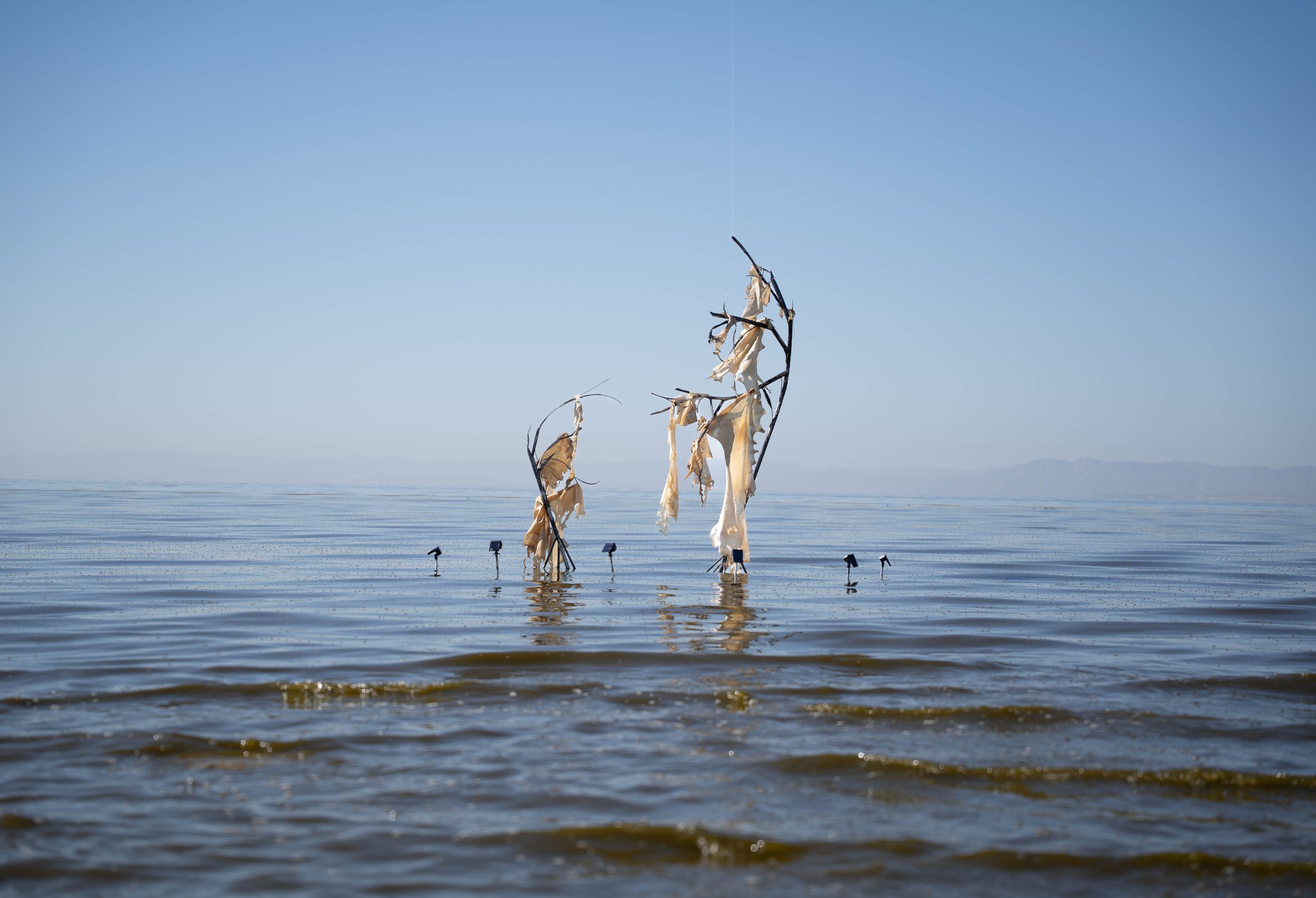
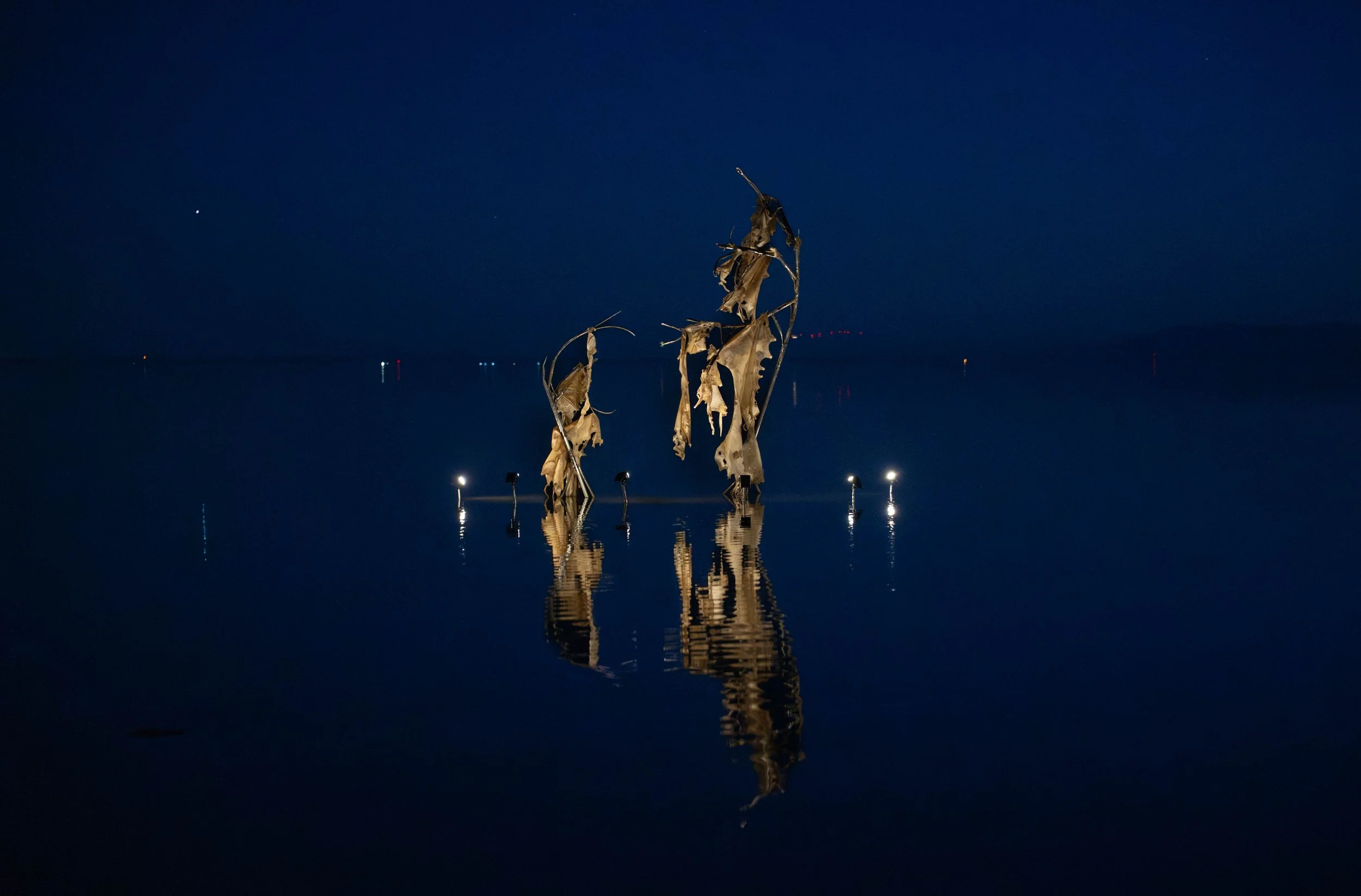
The sculpture is already undergoing its first transformation along the shoreline of the Salton Sea, where salt crystals encrust its surface and the steel oxidizes under corrosive conditions. Situated near the formerly abandoned town of Bombay Beach, it has become a site of dialogue about the sea’s collapse, revealing how human neglect produces landscapes simultaneously toxic and inhabited. The disaster—spanning roughly 245,000 to 325,000 acres—encapsulates both environmental catastrophe and social abandonment, demanding reflection on extractive systems, ecological irresponsibility, and the limits of human care.
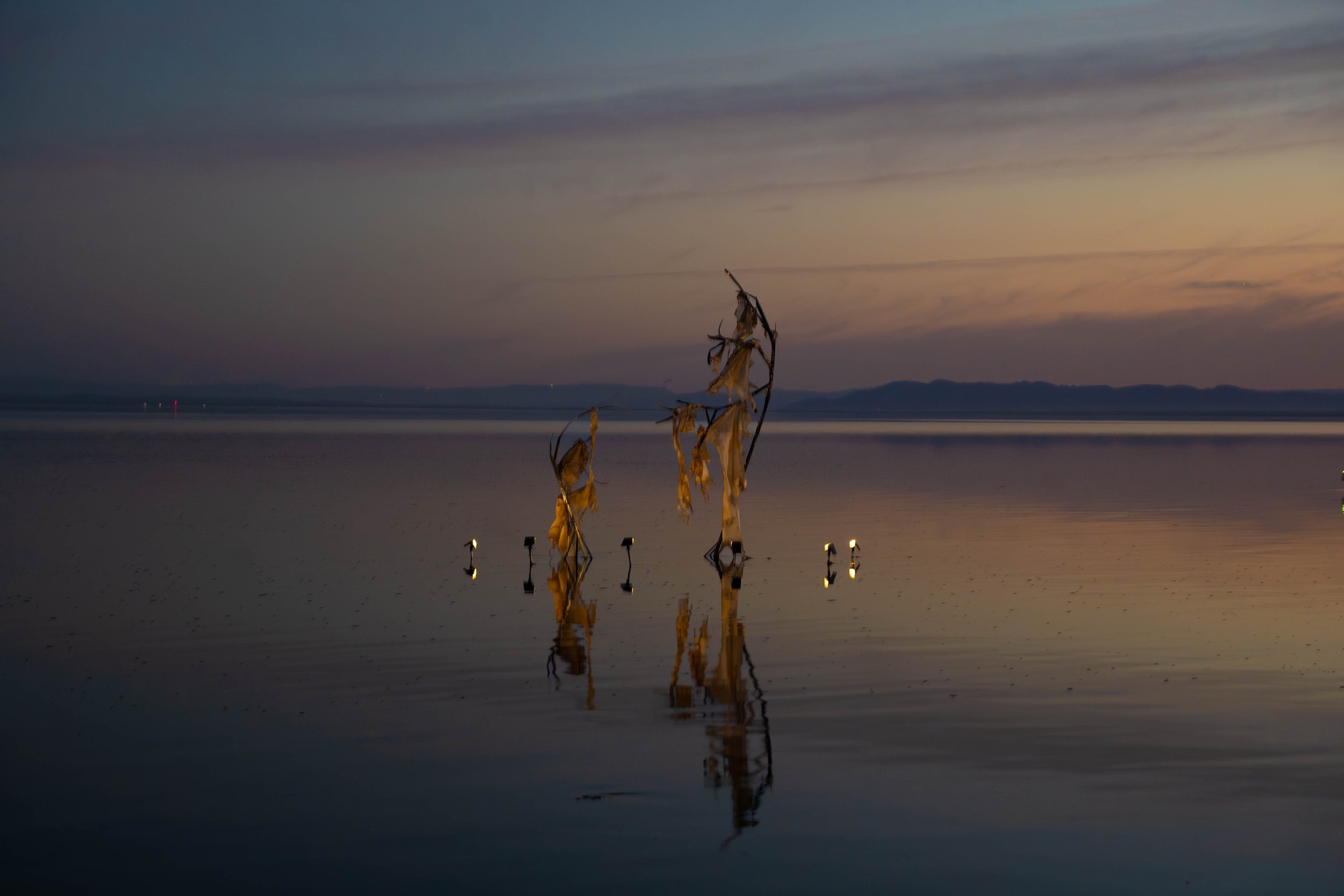
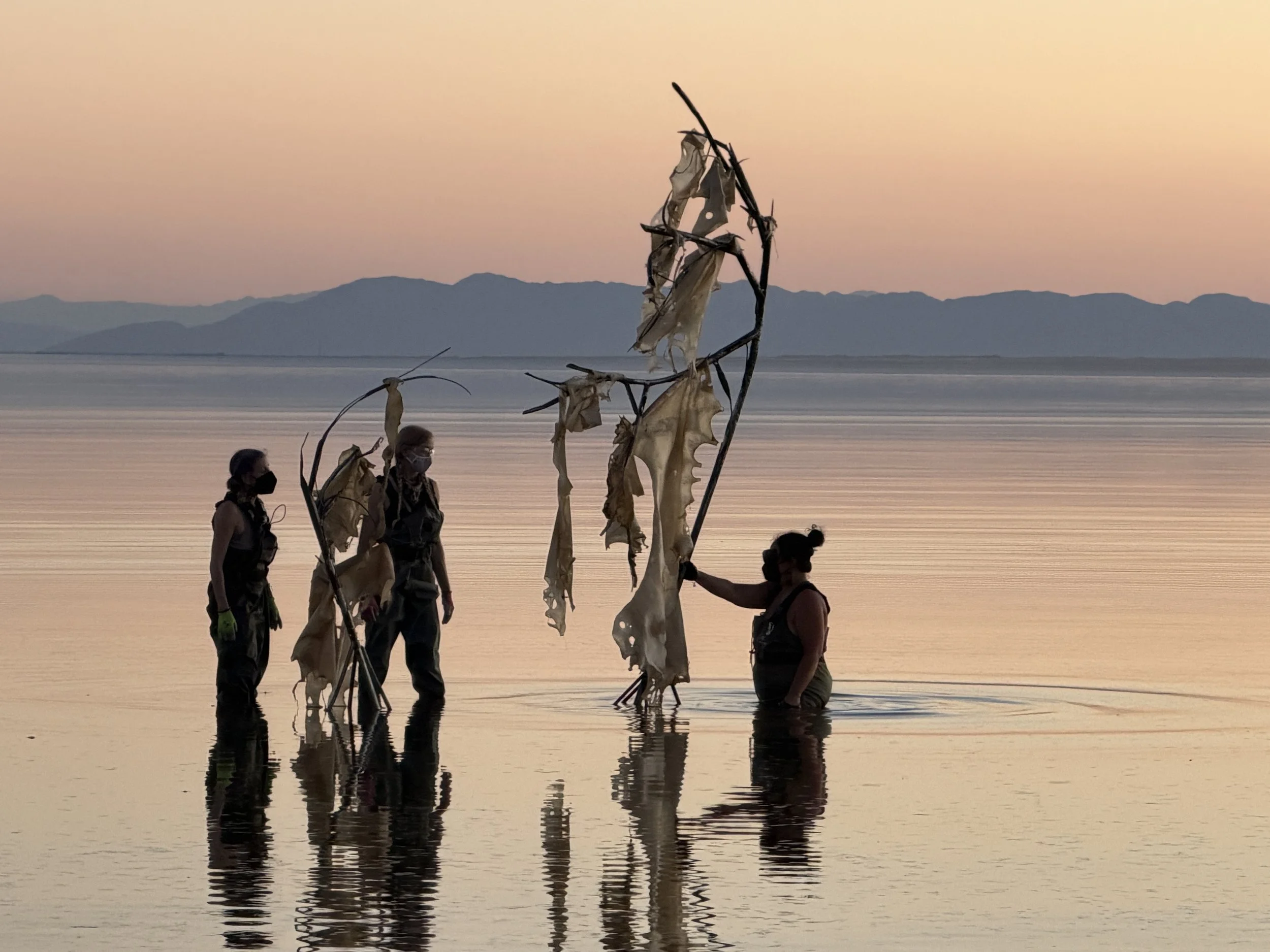
Early explorations with rawhide anchored the sculpture as vessels for confronting mortality; now, skin itself carries the story of place, absorbing the traces of its environment. It invokes the animal from which it came, while connecting the earth, dancers, and viewers through shared corporeal vulnerability.
Drawing on posthuman and relational materialist thinking, I treat materials, microorganisms, landscapes, and bodies as active agents co-constituting the work alongside human collaborators. By foregrounding the agency of cyanobacteria, UV radiation, and oxidizing steel, the project transforms the artwork into a site of negotiation between human and nonhuman vulnerability, presence and decay. The work engages broader discourse on materiality, relationality, and ecological ethics, questioning how we inhabit, honor, and negotiate the entanglement of our bodies with other lives, substances, and forces.